

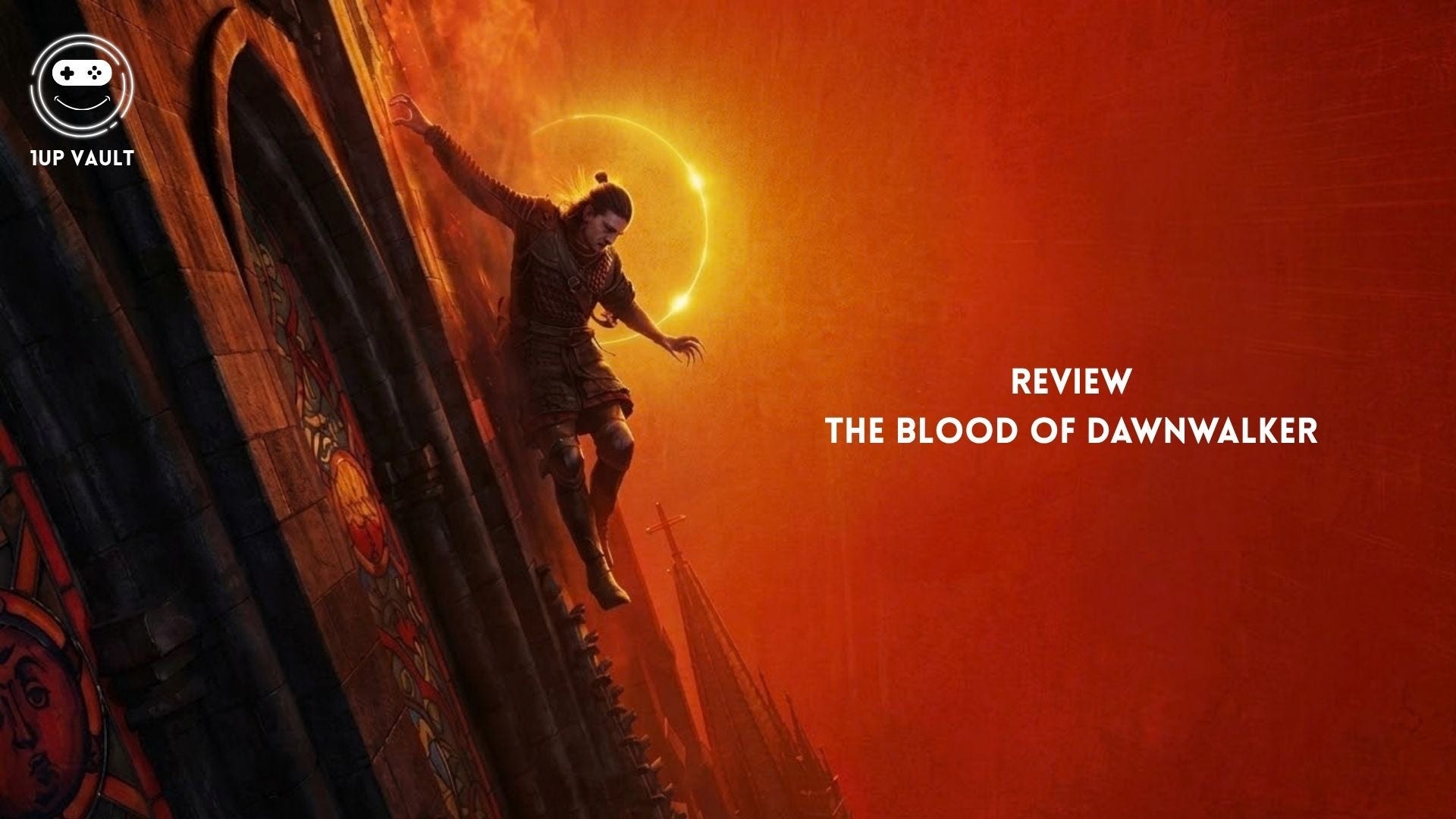
The Blood of Dawnwalker
Bandai Namco, Rebel Wolves / PC, PS5, XBSX
Played on PlayStation 5

Story & Lore
The Blood of Dawnwalker has us play as Coen, or Coen of Laslea as many come to call him, a young farmer whose world is turned upside down when ancient vampires take over the kingdom during the plague in the mid 14th century. Led by Brencis, the vampires, or The Vrakhiri, control the kingdom by supplying blood to the residents, which keeps life-threatening diseases at bay. However, it comes at the cost of the vampires feeding on them and ruling over them in an authoritative state, as well as banishing any religious symbols or other faiths. Coen helps his two sisters and brother, as well as his cold father, who in turn takes care of Coen’s mother, who is in a near vegetative state.
Eventually, Coen finds himself in an unexpected uprising and is turned into a vampire in the ensuing fight. However, he becomes something more than a vampire - a dawnwalker, living as a human by day and a vampire by night. While Coen tries to figure out this new life, he realizes his family has been taken. He has thirty days and nights to devise a way to Brencis, formulate a strategy, form alliances, and save his family.
The story of Blood of the Dawnwalker is like a mixture of high fantasy and gothic vampire tales, and it works. The lore that begins to be set up by the developers and writers here leaves you wanting more and more as you learn and discover what Coen has gotten himself into. You can tell they’re hoping to make this into a trilogy. The story also hints at the real world history that was taking place in the game’s setting, including the rise of Christianity, the pagan traditions still found in architecture, the wealth and class system, and the fear of the plague. It’s real history that meshes well with the dark gothic story it’s telling.
Characters & Writing
Among this year’s best character ensembles, Blood of the Dawnwalker’s cast has it all. Coen is the main hero, and he plays the part of the fish-out-of-water story as he finds himself transformed. You’ll make the decisions on how deeply he embraces his vampire self and how he gets blood. The villains are Brencis and his Court. The Court has some interesting characters, including the flamboyant Ambrus, the psychotic Bakir, and Xanthe, who kidnaps young women for mysterious reasons. These three are all solid and have some great moments when you confront them, but I do feel they needed to appear more to really give us a better understanding of them. However, Xanthe does have a more complicated backstory than I expected.
Brencis himself is a great foil for the story and Coen. He’s not cartoonishly evil and isn’t the typical “anti-villain“ we get these days. He’s well-written and portrayed as a vampire who has his own goals and sees Coen as an annoyance more than anything. Throughout the game, you’ll learn more about his backstory and lore. There are other side villains and crazy moments you can encounter , including monsters and hints at werewolves, which may be making an appearance in a sequel.
The side characters are awesome, no matter how big or small their roles are. Three romance options give us Anca, a reluctant helper who is a former nun, and despite the age gap, has a “will they or won’t they” relationship with Coen. There’s Crake, the leader of a rebellion and the option if you want to go the same-sex route. Last but not least, there’s Lacra, a feisty and at times shady vampire who hints at a larger backstory throughout the game. You don’t have to commit to just one, and in my opinion, if the plan is to explore different time periods, as has been said in recent interviews, it makes sense to have a romance with Anca in terms of this origin story. Maybe also with Lacra, as she seems to have the potential for a series-long relationship, especially since the romance path with her doesn’t feel finished by the end.
There are other great characters such as Ocha, who is an Uriashi, a race of mountain people with goat-like appearances. She struggles between freedom and becoming the leader of her clan. We also have Vicho, a vampire who fights his thirst for blood and may or may not, depending on your investigation, be responsible for some murders. You’ll also meet a host of others, from nuns to more Uriashi, and deciding the fate of prisoners. Almost every encounter comes with decisions that have actual long-standing consequences. These are characters you want in an epic story, and I think Blood of the Dawnwalker provides that. It may not be a massive ensemble that most Western RPGs have, but the quality is solid.

Gameplay & Mechanics
The main gameplay mechanic for Blood of the Danwalker is a time system that makes the quests you choose to pursue extremely important. Every time you complete a quest, you’ll get a time segment or more used up. Once the day passes, you enter the night, which turns Coen into a vampire. After that night ends, you have passed a whole day and now have twenty-nine days left to save your family. You can technically ignore the time, and it becomes a revenge quest, but you’ll have plenty of time. I’m not the type who likes time limits like these, and I had about eight days left when I decided to go ahead and finish the story. Sometimes, segments feel like they are rushing the days, but trust me, it’s fine. However, once you save your family, that’s it, and you can’t roam around and finish the side quests, which I do think wasn’t the greatest decision.
However, please be careful with which quests you decide to pick. While the 30-day limit didn’t become an issue for me, it can if you go full completionist mode. It’s tough because there are some real good quests and missions here. Without spoiling it, I bumped into some really cool ones that expanded the lore and made me want to learn more about this world’s history.
As you travel around the countryside, you’ll be able to upgrade your skill tree. You can focus on sword mastery, witchcraft, or vampire skills. I primarily concentrated on the vampire path, as I loved the feeling of playing as one, making nighttime my favorite moments in the game. The skills require finding books and notes to unlock more in the skill tree, and they do consume time, especially the more powerful ones. I did personally find it annoying that time segments were used with the skill tree, but, as I mentioned earlier, it didn’t seem to affect my 30-day limit, and I still finished the game before time was up.
There are essentially two gameplay and combat loops here, one during the daytime and one at night. The daytime combat took me some time to get used to. Enemies will swing at you, and you’ll see an icon of a shield and an arrow pointing in a direction. You have to block and pull your thumbstick in the direction it indicates, or you can get hit pretty hard. This can be tricky, and I don’t like how punishing it can be when you miss a directional block; but luckily, the game does have an option to turn on auto-direction during blocks, which I had to enable to get used to it. If you get a hold of it, it can be very satisfying and fun, but I do think it’s not an easy play style to adapt to, which makes the accessibility settings so important.
The nighttime is all about being a vampire. You’ll use your claws and just rip apart your enemies, as well as be able to use powers and suck their blood. Health is treated differently, as you need to drink blood to keep your health up. You can drink human blood or animal blood to make that happen. As you do, you’ll pick up corruption, which helps you upgrade your vampire abilities that much more. If you’re not careful and your health is too low as a vampire, Coen will just straight up kill the person you’re talking to, even if it’s an important NPC! This is another element that sounded annoying to me, but as long as you keep your eye on your health bar, it never becomes a problem, but it does add to the realism that you are indeed a vampire with cravings.
Last but not least, there’s also a variety of weapons ranging from slow attacks to fast ones. You also have armor and clothing that can add to defense or help with your stats. Rings and amulets help add buffs and special powers to help you build the best character possible on your quest. The swords are designed really well, including several special weapons with cool names and backstories. The armor also has some great looking pieces, and I would suggest scouring the world as much as you can for them; although, be careful of over encumbering yourself. You’ll also pick up ingredients to craft potions and food to heal and buff your abilities, as well as junk that can be sold to vendors and blacksmiths.
World & Level Design
The world you explore here isn’t small, but it isn’t as big as your typical open-world RPGs. If you imagine an Obsidian version of the map of The Witcher, that’s probably the best I could do to explain it. Despite being smaller than most in the genre, it still feels alive, and you’ll have no problem getting lost in it as you explore. However, I do feel the biodiversity isn’t the best it can be. There are acres and acres of just trees and bogs, which got predictable early on. It’s not too bothersome, but if you notice it, it’s hard to stop thinking about it if you want to go more free roaming. It hit me as I tried to use up time segments towards the end; a lot of the land looks similar.
Outside of the biodiversity, there’s still a lot that is well done. The design across the land fits whether you are going in as a human or a vampire. There are towers to help you expand map points, but you have to climb them as a vampire. You can scale buildings as a vampire, and it doesn’t break the immersion. When you’re human, places like the cathedral are well designed, and you can find a couple of mysterious catacombs and dungeons that also tend to look alike, but look good. When you do find some biodiversity in the world, the game can showcase some hidden graphical fidelity and look gorgeous, specifically the mountains.
The lived-in spaces are the secret ingredient here. The cities, farms, castles, and all the other areas where you’ll find people living are well made and seem like real places. The biggest city, Svartrau, has architecture of the time, as well as alleyways and hidden spots that you expect in an old city. It’s as if the developers either had someone on the team or did a good job researching the ins and outs of designing a city with population and engineering in mind. It’s pretty impressive.

Audio & Sound Design
The mid-century and Gothic feel of Blood of the Dawnwalker is represented well in the music. It’s more atmospheric than anything else, but in a good way. There is a song with lyrics that pops in towards the end that I think conveys the feeling of the time and the setting well. Sound is normal for the most part, as you’ll get the usual metal sounds and weird noises coming from monsters. Overall, the sound isn’t anything special, but it gets the job done, while the music has some high moments but is more about the tone and atmosphere than anything.
Art Direction & Graphics
From a graphics standpoint, Blood of the Dawnwalker is a mixed bag for me. On one hand, there are moments when I was exploring that look stunning. These tended to be around sunset and sunrise, so maybe the art direction just fits those times better. However, due to the lack of biodiversity, I do think the trees and bogs start to blend together and don‘t do the art justice. The water also has a lot of hiccups from the many technical issues I encountered. You can’t tell it’s a Unreal Engine game, but you can see The Witcher influence in the art style. I also thought the game came off way too dark during the peak of night, forcing me to raise the brightness.
The best part of the art direction is the paintings and loading screen art. These look like pieces from the time, and I would like to applaud wherever they got them or whoever drew them because it’s a testament to making something that also fits the time period. Every time I was inspecting a wall with old Pagan or stained glass art, I looked at it longer than you would think because it looks that good.
Direction & Performances
The performing cast are stellar. Will de Renzy-Martin nails the relucant and naive hero that Coen is with his tone and reactions to crazy situations. Andrew James Spooner is giving it all with Brencis, capturing the confidence of the old vampire. Helen Keeley breathes life into Anca as shy and unsure. Lorne MacNaughton is the MVP as Ambrus, although I wish we saw more of him as he embraces the extroverted and narcissm of the character. Megan Smart also delivers with Lacra, coming off as a bit of an a-hole, but also enough that I still cared about her and what her backstory was hinting to. I can go on and on, but it’s a solid cast that make the characters come to life.

User Experience
I felt like I was playing a launch version of a Bethesda game. I mean, I saw small technical issues after small issue. None of them broke the game or became problems, but they were very noticeable to me as I played. The main one was whenever I went fast while walking in the open, a weird line showed up near the bottom of the screen, almost like it was having trouble keeping up with loading the ground as I ran. There was also the water, which looked good at times and then just looked like a PS1-era pool blue. I saw a lot of clipping through rocks and walls, and it went on and on. Like I said, none of it messed with my experience, but it was notable enough that I hope they patch a lot of that up sooner than later.
There is one major warning about user experience I have to give, and it’s because I went through it. When it comes to major quests in the campaign or during romance missions, never leave your character if they want you to wait for them. I made a very dumb mistake doing this when it became night during a day-only mission and left Anca alone, only to come back to see her dead. I have a tendency to have very few saves (it’s an OCD thing for me), and I couldn't fix it. I was so mad, but I had to keep going. I do feel they should have warned me, as you can see I’m still a bit bitter about it. Just remember not to freak out if you feel you’ re about to waste the time segment - it’ll be fine.
Another thing that may annoy you is the blocking directional mechanics, but, like I said, there’s a toggle to take care of that. The game has a good amount of difficulty customization, which I really like because I would’ve gotten pretty frustrated if I didn’t care about them.
Replay Value
This is one of the most replayable games ever. I feel like, by the end of it, I was starting to understand the game so much better that I’m open to replaying the game again and doing things a little differently, as well as making up for getting Anca killed. The developers have already said they hope to make a sequel and choices here will affect some choices there, so I would be open to playing this again. It’s not a short game, but it ‘s definitely not as long as your typical open-world RPG, which makes it easy to jump back in.
Recommendation
If you are a fan of games like The Witcher and Mass Effect, I think this is right up your alley. Blood of the Dawnwalker is poised to become a major franchise in this category if they keep up with it consistently. I would even argue this is a perfect starter game for Western RPGs. It’s not too long, it has choices, and you can go back and replay it once you get a better hang of it. It’s an easy recommendation to many people.
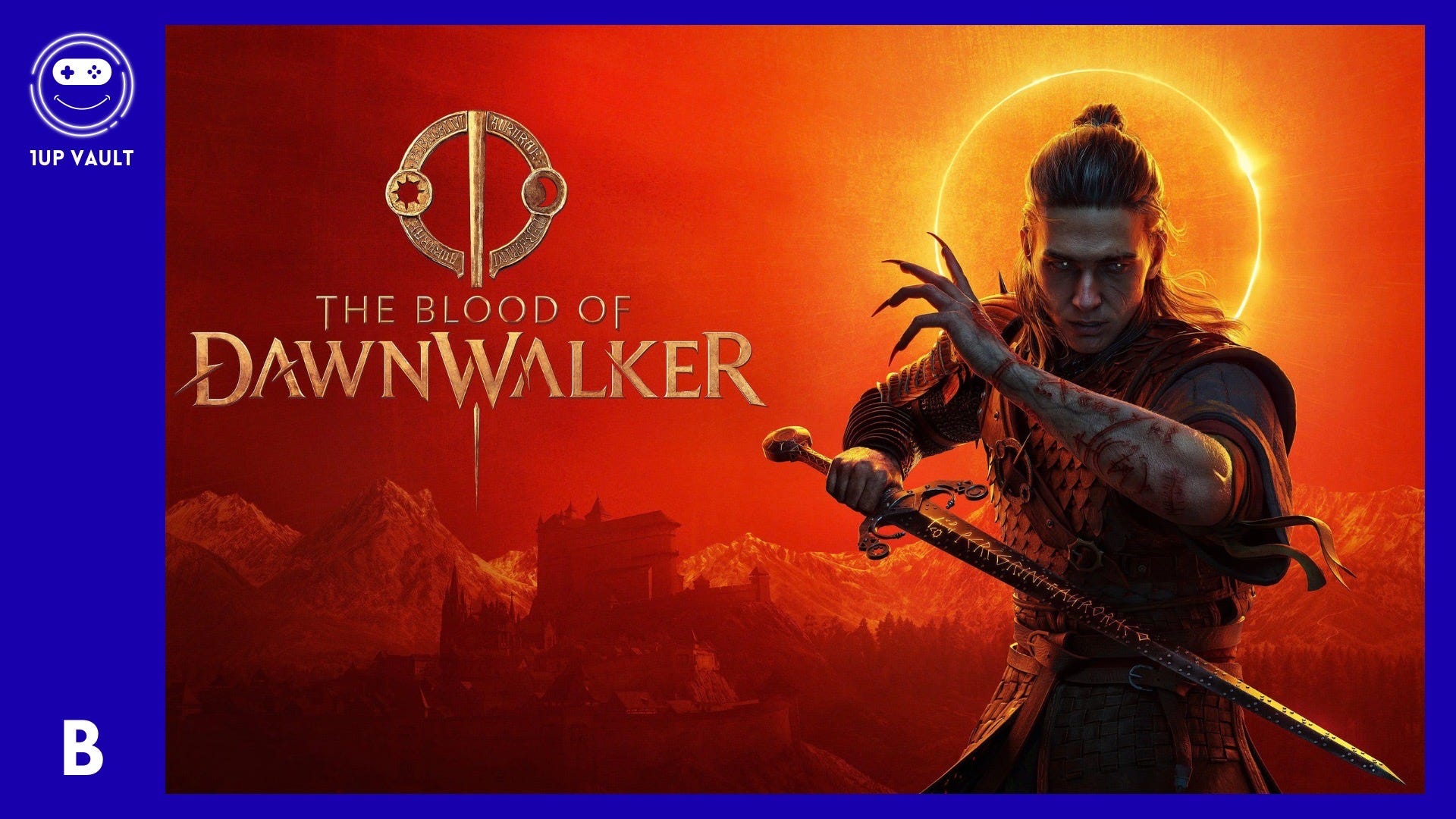
B - Good
The Blood of Dawnwalker is a solid RPG that’s perfect for newcomers to the genre. I think there’s a lot of good stuff here, and I can see the seeds of an amazing franchise starting. The game, unfortunately, is held back by some small technical issues, and I do think it feels more like a setup for something more than anything. Its world can get repetitive, and once you are done dealing with Brencis’ Court and any romance missions, I found it hard to have a reason to keep going, although there are some really good side quests as well. However, I had a blast experiencing Coen’s story, and this is without a doubt the best vampire game I’ve ever played. If Rebel Wolves keeps up with it, the sequel could reach S-tier status if they just go all out after making this one. As I wait for that sequel, I’ll be looking to sink my teeth into this one again. (Come on, you know that’s good)